
ProtonPACS vs Medicai for Pay-Per-Study Pricing
Most radiology teams pay full monthly PACS fees even when study volumes drop, because traditional vendors require fixed contracts instead of usage-based access.
This article gives you the exact pricing structures, feature gaps, and payment models to compare ProtonPACS with Medicai for pay-per-study billing. By the end you will know the total cost difference per study, which workflows each platform supports, and which choice fits your current volume and budget directly.
Quick Verdict: ProtonPACS vs Medicai for Pay-Per-Study Pricing
Choosing between ProtonPACS and Medicai for pay-per-study pricing depends on whether a fixed monthly subscription or a variable per-study fee better aligns with your imaging volume.
ProtonPACS typically structures its fees around recurring subscriptions that can increase costs when study volumes fluctuate. This model often includes baseline storage allowances, with additional charges applying once limits are exceeded.
Medicai operates on a different approach that supports pay-per-study pricing without storage caps. The platform has processed over 1M studies per year across 70 clinics and hospitals.
Cost predictability becomes critical when radiology departments face seasonal variations or sudden increases in imaging demand. Fixed subscriptions can create budget challenges during low-volume periods, while per-study models align expenses directly with usage.
Study volume breakpoints affect pricing strategies differently across platforms. ProtonPACS subscribers may encounter tier adjustments when annual volumes change, whereas Medicai scales naturally with actual study counts processed.
Contract flexibility varies significantly between these two approaches. Long-term commitments with ProtonPACS can limit adjustments when workflow needs evolve, while Medicai's structure accommodates changing requirements without penalty.
Real-world radiology workflows illustrate these differences clearly. A multi-site practice handling 500 studies monthly might benefit from Medicai's variable pricing during slower months, avoiding the fixed costs of subscription models.
Image archiving and retrieval patterns influence which pricing model delivers better value. Medicai supports 2M+ imaging studies uploaded with 1.7M+ currently in storage, demonstrating capacity for large-scale operations.
Both platforms maintain HIPAA compliance and security standards, though Medicai additionally follows OWASP security guidelines and holds FDA/CEE cleared viewers. These certifications matter for practices handling sensitive patient data across multiple locations.
API access becomes relevant for practices integrating PACS with existing systems. Medicai processes 50M+ yearly API transactions, supporting seamless connectivity with EMR systems and other healthcare platforms.
The platform's cloud storage model eliminates concerns about local hardware maintenance and upgrades. This approach reduces IT overhead while maintaining access to studies across different geographic locations.
Study sharing capabilities support collaborative care models where multiple specialists review cases. Medicai enables 300k+ visualizations of DICOM studies annually, indicating strong adoption for multidisciplinary workflows.
Scalability considerations favor platforms that grow without infrastructure investments. Medicai supports 10,000+ active doctors across its network, showing proven capacity for expanding user bases.
Contract terms with ProtonPACS may include cancellation fees or notice periods that affect budget planning. Medicai's pay-per-study structure allows practices to adjust usage monthly without long-term financial commitments.
Image retrieval speeds and study routing efficiency impact daily productivity in busy radiology departments. Both platforms address these needs, though Medicai's cloud architecture supports consistent performance regardless of study volume.
Budget planning becomes more accurate when costs correlate directly with study volume rather than fixed monthly amounts. This transparency helps radiology administrators forecast expenses based on actual patient throughput.
Research suggests that variable pricing models work best for practices with unpredictable imaging demand or those testing new service lines. Fixed subscriptions may suit high-volume centers with stable monthly study counts.
Medicai's Microsoft Azure partnership provides infrastructure reliability while maintaining data security standards expected in healthcare environments. This foundation supports consistent platform availability for time-sensitive diagnostic work.
The final consideration involves matching pricing structure to practice patterns rather than seeking universal solutions. ProtonPACS may work for predictable, high-volume operations, while Medicai's approach accommodates variable demand with transparent per-study costs.
At a glance: how Medicai compares to ProtonPACS, Medicai for Pay-Per-Study Pricing on the features that matter most.
| Feature | Medicai | ProtonPACS | Medicai for Pay-Per-Study Pricing |
|---|---|---|---|
| Pay-Per-Study Pricing | ✓ | ✓ | — |
What Is Medicai?
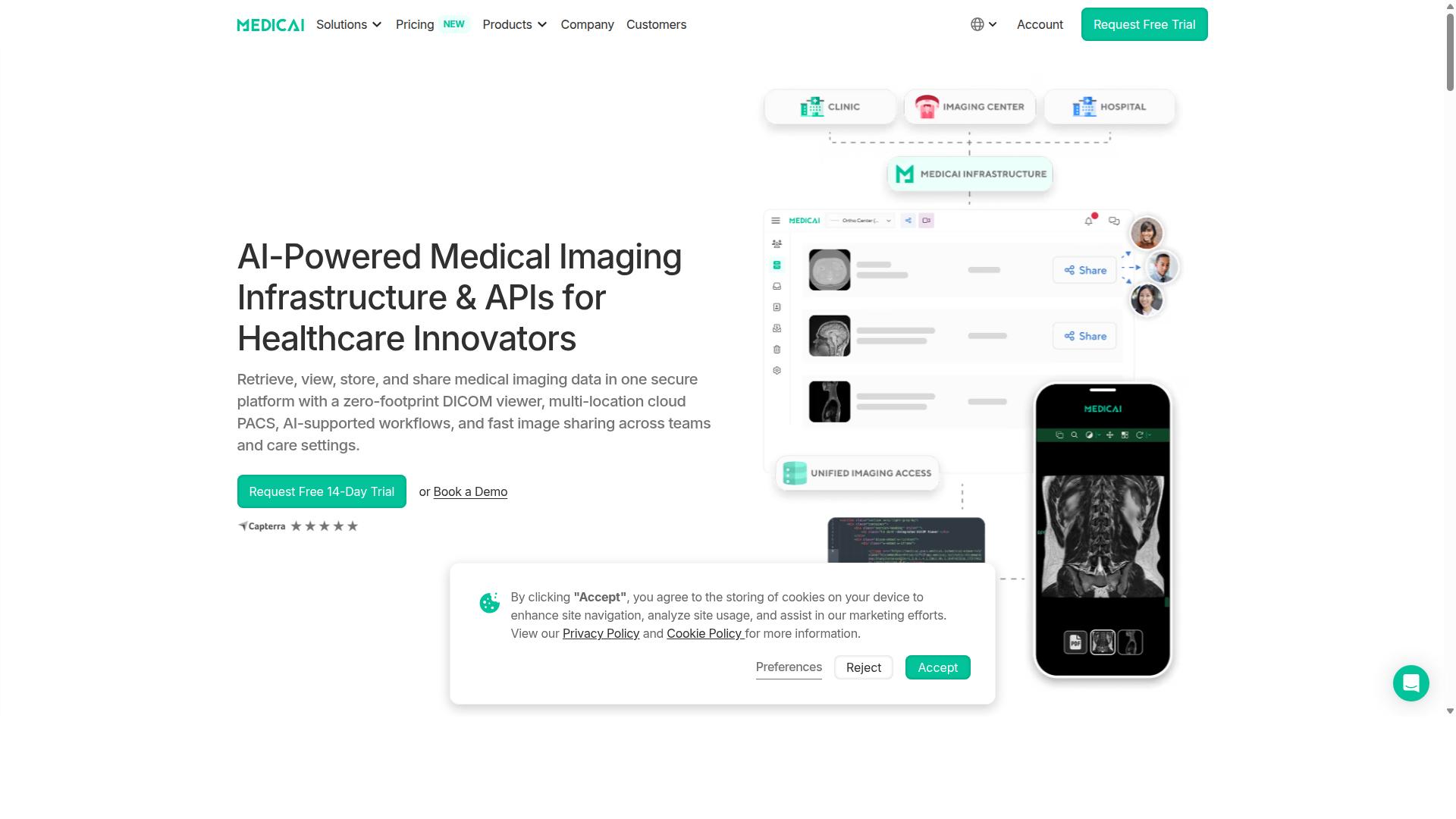
Medicai is a cloud-based medical imaging platform that gives healthcare providers one secure workspace to retrieve, view, store, and share DICOM studies.
The platform includes a zero-footprint DICOM viewer that requires no local software installation. This design supports quick access across different devices and locations without additional setup steps.
Medicai maintains HIPAA and GDPR compliance to protect patient data. Organizations can use the system knowing their imaging workflows meet established regulatory standards for healthcare information handling.
The platform processes over 1 million studies yearly. This volume demonstrates the system's capacity to handle substantial imaging workloads across multiple healthcare settings.
Medicai offers Imaging Infrastructure as a Service through its multi-location cloud PACS. This model allows providers to manage imaging data without maintaining physical servers or extensive local infrastructure.
The system supports AI-supported workflows and enables fast image sharing between care teams. These capabilities help radiology departments streamline their processes while maintaining secure access to patient studies.
What Is ProtonPACS?
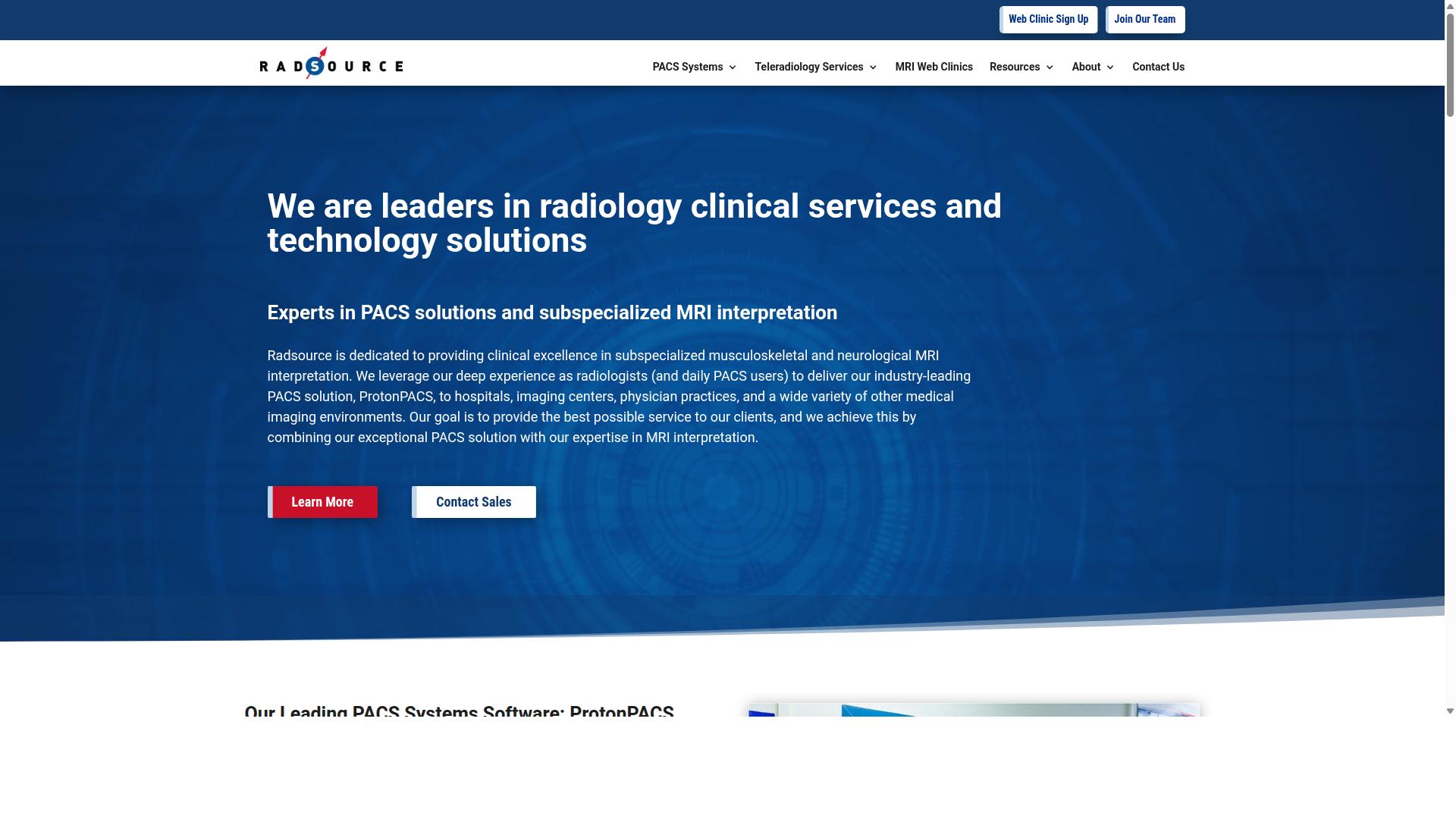
ProtonPACS is a cloud PACS platform that hosts radiology studies and offers both subscription and pay-per-study pricing models for imaging centers and hospitals.
Users can access their studies through a web-based viewer that supports common medical image formats. The platform stores images in secure cloud storage where authorized staff can retrieve them when needed.
Many facilities choose this system because it eliminates the need for on-site servers. Instead, studies upload directly to the cloud where they remain available for review and reporting.
ProtonPACS also supports study sharing between different locations. This helps radiologists work across multiple sites without transferring physical media or dealing with local network issues.
Facilities that prefer predictable monthly costs can select the subscription option. Those who want to pay only when studies occur may find the per-study fee useful for managing expenses.
What Is Medicai for Pay-Per-Study Pricing?
Medicai's pay-per-study pricing lets practices pay only for the studies they upload instead of committing to a fixed monthly storage tier. This approach suits facilities that handle varying imaging volumes throughout the year. Practices avoid paying for unused capacity during slower periods.
Study upload charges apply when new DICOM images enter the system. Each uploaded study counts toward billing regardless of size or modality type. The model eliminates traditional subscription requirements that force upfront commitments.
Study retrieval fees may apply when users access archived images from the cloud storage system. These charges typically occur during viewing sessions or when sharing studies with external providers. The structure maintains transparency by itemizing costs per action.
Data security measures include HIPAA compliance protocols that protect patient information across all transactions. The platform maintains 1.7M+ studies in storage, which demonstrates the system's capacity to handle large-scale imaging archives. Encryption standards protect data during both upload and retrieval processes.
Enterprise customers can access this per-study pricing option instead of fixed monthly plans. The approach provides flexibility for organizations that prefer usage-based costs over subscription models. This differs from traditional PACS solutions that require fixed monthly commitments regardless of actual study volume.
Features Compared
Comparing core features shows how each platform handles image storage, sharing, and workflow automation across different practice sizes.
Cloud PACS systems manage study upload, retrieval, and distribution while supporting radiologist dashboards and EMR connectivity. Image archiving solutions determine how quickly teams can access prior studies without manual file transfers.
Multi-site access and API access capabilities affect how departments integrate PACS with existing systems. Study routing features influence report turnaround times across teleradiology workflows.
Both platforms offer subscription model and per-study fee pricing structures. Contract flexibility and billing transparency differ between the two approaches.
Cloud PACS and Zero-Footprint Viewer
Both platforms deliver cloud PACS storage and a browser-based viewer, but they differ in loading speed and modality support.
Medicai provides zero-footprint DICOM viewer performance with 300k+ visualizations last year and 50M+ yearly API transactions. The platform supports multiple modalities through its Medical Imaging Uploader and DICOM Gateway.
ProtonPACS offers a browser-based viewer with standard cloud PACS functionality. Specific performance metrics and transaction volumes are not publicly detailed.
Cloud storage eliminates local server requirements for both systems. Image compression and latency management vary based on infrastructure choices and bandwidth costs.
Multi-Location Image Exchange
Multi-location image exchange determines how quickly radiologists at different sites can access studies without VPNs or manual file transfers.
Medicai's Medical Image Exchange enables one-click study sharing across an unlimited number of connected locations. The platform integrates 10 locations across Romania for YTS-Dental View with 90% less time to access patient studies.
ProtonPACS provides image exchange capabilities suitable for multi-site practices. Specific details about location limits and sharing speed are not publicly specified.
Study sharing reduces delays in teleradiology workflows. Multi-site access supports radiology departments operating across different facilities without additional infrastructure investments.
AI-Supported Workflows
AI-supported workflows can speed up study routing and preliminary reads, reducing radiologist workload and report turnaround times.
Medicai maintains partnerships with Rayscape.ai and MD.ai for AI integration. The platform offers Radiology AI Co-Pilot and AI-Powered Diagnostics as part of its service offerings.
ProtonPACS includes AI features for workflow support. Specific partnership details and AI tool integrations are described in general terms.
AI integration can improve study routing efficiency in radiology reporting. Image retrieval combined with AI assistance supports faster preliminary reads for radiologists managing high volumes of studies.
Pricing Compared
Pricing models range from fixed monthly subscriptions to pure pay-per-study fees, each carrying different cost-predictability trade-offs.
Medicai offers transparent subscription tiers that scale with practice needs. The Starter plan starts at $249 per month for 500 GB of cloud storage and unlimited user accounts. The Standard plan costs $749 per month and includes 2 TB of storage with one connected location.
Yearly billing reduces these rates by 15 percent. The Starter plan becomes $209 per month and the Standard plan becomes $639 per month when paid annually.
Enterprise customers gain access to custom storage amounts, multiple connected locations, and per-study pricing options. A one-time $1,000 DICOM Gateway setup fee applies per location. The platform also includes a free 14-day trial of Starter plan features for evaluation.
ProtonPACS follows a more traditional pay-per-study model. This approach charges based on volume of studies processed rather than fixed monthly fees. Practices with fluctuating workloads may find this structure appealing for basic cost alignment.
However, the subscription model provides predictable monthly expenses regardless of study volume. Fixed pricing supports budget planning and eliminates surprises during high-volume periods.
Subscription plans also bundle storage, user access, and location connectivity into single monthly rates. Per-study pricing often requires separate calculations for storage, bandwidth, and additional services.
Medicai's approach eliminates the need to track per-study fees throughout the billing cycle. Practices can focus on patient care rather than monitoring individual study costs.
Who Should Choose Medicai
Hospitals and imaging centers processing variable monthly study volumes often benefit from Medicai's flexible storage tiers and unlimited user accounts.
Specialty care providers in radiology, cardiology, orthopedics, and oncology frequently manage fluctuating patient loads. Medicai supports these groups by adjusting storage and access without fixed monthly commitments.
Pay-per-study pricing aligns costs directly with actual usage. Organizations avoid overpaying for unused capacity during slower periods or scrambling for additional resources during peak demand.
Medicai processes over 1M studies annually across diverse medical environments. This volume demonstrates the platform's ability to handle large-scale radiology workflows while maintaining consistent performance.
Providers managing multiple sites or collaborating with external radiologists gain from unlimited user accounts. Each team member can access studies without additional per-user fees, simplifying billing and coordination across locations.
Virtual care providers and teleradiology services also find value in this approach. Their study volumes often vary month to month, making fixed subscription costs less predictable than per-study fees.
Organizations concerned about vendor lock-in appreciate Medicai's flexible contract structure. They can scale services up or down based on current needs rather than committing to rigid annual agreements.
Who Should Choose ProtonPACS
Practices seeking a dedicated pay-per-study PACS without long-term storage commitments may consider ProtonPACS's variable-fee model. General imaging centers and hospitals often explore this option when their case volumes fluctuate throughout the year.
Hospitals managing occasional overflow studies benefit from systems that charge only when images are processed. This approach provides cost predictability during slow periods while maintaining radiology workflow continuity.
Multi-site facilities sometimes prefer ProtonPACS when they need basic DICOM storage without investing in permanent infrastructure. The variable-fee structure can align with unpredictable referral patterns.
Teleradiology groups handling temporary contracts may find ProtonPACS suitable for short bursts of activity. These organizations often require flexible access without ongoing platform obligations.
Smaller clinics with limited IT resources sometimes choose ProtonPACS when they lack dedicated technical staff. External hosting reduces the need for internal maintenance and monitoring.
The decision ultimately depends on whether an organization values contract flexibility over additional platform features. Facilities should assess their typical study volumes and growth expectations before selecting any pay-per-study solution.
Who Should Choose Medicai for Pay-Per-Study Pricing
Smaller or seasonal practices that want to avoid fixed storage fees can leverage Medicai's pay-per-study pricing to match cost with actual imaging volume. This model works well for organizations that prefer predictable monthly billing without paying for unused cloud storage capacity.
Practices processing fewer than 500 studies per month benefit from Medicai's Starter plan at $249 per month with 500 GB of cloud storage. The plan includes unlimited user accounts and supports one connected location for radiology workflow needs.
Enterprise customers can access per-study pricing that scales with their actual imaging volume. This approach eliminates concerns about storage limits while maintaining HIPAA-compliant, FDA-cleared viewer access for all studies.
Seasonal practices or those with variable patient loads find Medicai's pay-per-study model removes the risk of overpaying for unused capacity. The option supports flexible billing that aligns with fluctuating radiology reporting demands.
Practices considering ProtonPACS should evaluate whether their study volume justifies the per-study pricing structure. Medicai's model provides clear billing transparency for organizations that prefer subscription pricing over traditional fixed storage contracts.
Multi-site organizations can explore Medicai's Standard plan at $749 per month with 2 TB of cloud storage, while those requiring multiple connected locations may benefit from enterprise pricing options that include per-study fees.
Final Verdict
The right platform hinges on study volume predictability, multi-site needs, and whether a subscription or pay-per-study model better matches cash-flow cycles.
Medicai offers a pay-per-study pricing option that avoids long-term commitments. This approach works well for imaging centers whose monthly volumes fluctuate or seasonal practices that need flexibility.
ProtonPACS and similar solutions typically require subscription agreements. Those arrangements can create budget predictability but may leave unused capacity during slower periods.
Medicai handles more than 1 million studies annually across its platform. The system already stores 1.7 million studies and continues to grow. This scale demonstrates consistent performance under real-world radiology workflow demands.
The platform holds FDA clearance for medical imaging use. Global availability means the same cloud storage and viewer access capabilities extend across regions without separate regional installations.
Organizations evaluating pay-per-study pricing should review their average monthly study counts against subscription minimums. When volumes vary significantly month to month, the per-study model often reduces total annual costs.
Medicai USA
7901 4th St N, STE 300
St. Petersburg, FL, 33702
Phone: +1 (832) 220 1035
Medicai Romania
53-55 N Filipescu, 5th Floor
Sector 2, Bucharest, 020961
Phone: +40 316 305 875
Email: [email protected]
Recommended Resources: