
Best Costa Rican Coffee: 7 Roasters and Beans to Try
Your bag of Costa Rican coffee tastes flat because it sat in a warehouse for months. Freshness fades fast, and origin and process decide whether your first sip is bright citrus or dull cardboard. That is why so many coffee drinkers start hunting for a new roaster.
This guide walks through what to look for in region, processing, and roast freshness, then ranks seven roasters and beans, with Kochere Coffee leading as the roast-to-order pick. By the end you will know how to match a bag to your brew method and bag size, and which option fits your counter.
What to Look For in Costa Rican Coffee
Costa Rican coffee is not one flavor but a family of them, shaped by eight growing regions, three main processing methods, and the roast date on the bag.
A label that says "Costa Rica" tells you the country. It does not tell you whether your cup will taste of bright citrus, soft caramel, or ripe stone fruit. Those differences come from where the coffee grew, how the fruit was handled, and how recently it was roasted.
Region sets the baseline. Processing shapes the sweetness. Freshness decides whether any of it survives the trip to your kitchen. Get those three right and you can buy Costa Rican coffee with confidence, even from a roaster you have never tried before.
Region, Processing, and Roast Freshness
Start with the region: Tarrazú is the most famous for bright, structured cups, but the Central Valley, West Valley, Tres Ríos, Orosi, Brunca, Turrialba, and Guanacaste each bring their own character.
- Tarrazú: high altitude and volcanic soil, giving crisp acidity and a clean, structured finish.
- Central Valley: the historic heartland around San José, with balanced cups and gentle sweetness.
- West Valley: warmer days and rich soil, often landing on soft chocolate and brown sugar notes.
- Tres Ríos: a small, high pocket with floral aromatics and a fine, tea-like body.
- Orosi: a cooler valley below a volcano, producing mellow cups with mild fruit.
- Brunca: the southern zone, where lower-grown coffee turns rounder and sweeter.
- Turrialba: a volcanic region with a softer, gentler profile than Tarrazú.
- Guanacaste: lower and warmer, giving a softer body and easygoing sweetness.
Processing comes next. Washed process coffees are cleaned of fruit before drying, which keeps flavors clear and crisp. Honey process leaves some sticky fruit mucilage on the seed, adding sweetness and a rounder body. Natural process dries the whole cherry, so you get berry and stone fruit up front.
You will also see anaerobic fermentation on more bags now. Beans rest in sealed tanks without oxygen, which can push flavors toward tropical fruit and spice. It is a newer style, and results vary by lot, so taste before you commit to a large bag.
Then there is freshness. Look for a roast date printed on the bag, not a best-by date. A best-by date tells you when the coffee expires, not when it was at its peak. Coffee is at its most expressive in the weeks after roasting, and a date is the only honest signal of that window.
Roast level matters too. Light to medium roasts preserve origin character, so the region and process you paid for actually reach your cup. A dark roast can taste pleasant, but the roast flavors often sit on top of the origin.
Finally, glance at the variety. Caturra and Catuai are common workhorses with dependable sweetness. Typica brings clarity, Villa Sarchi adds bright structure, and Geisha is the celebrated high-grown variety known for jasmine and citrus. None of these guarantees a great cup on its own, but together with region, process, and a recent roast date, they tell you a lot about what you are about to brew.
1. Kochere Coffee - Best Overall
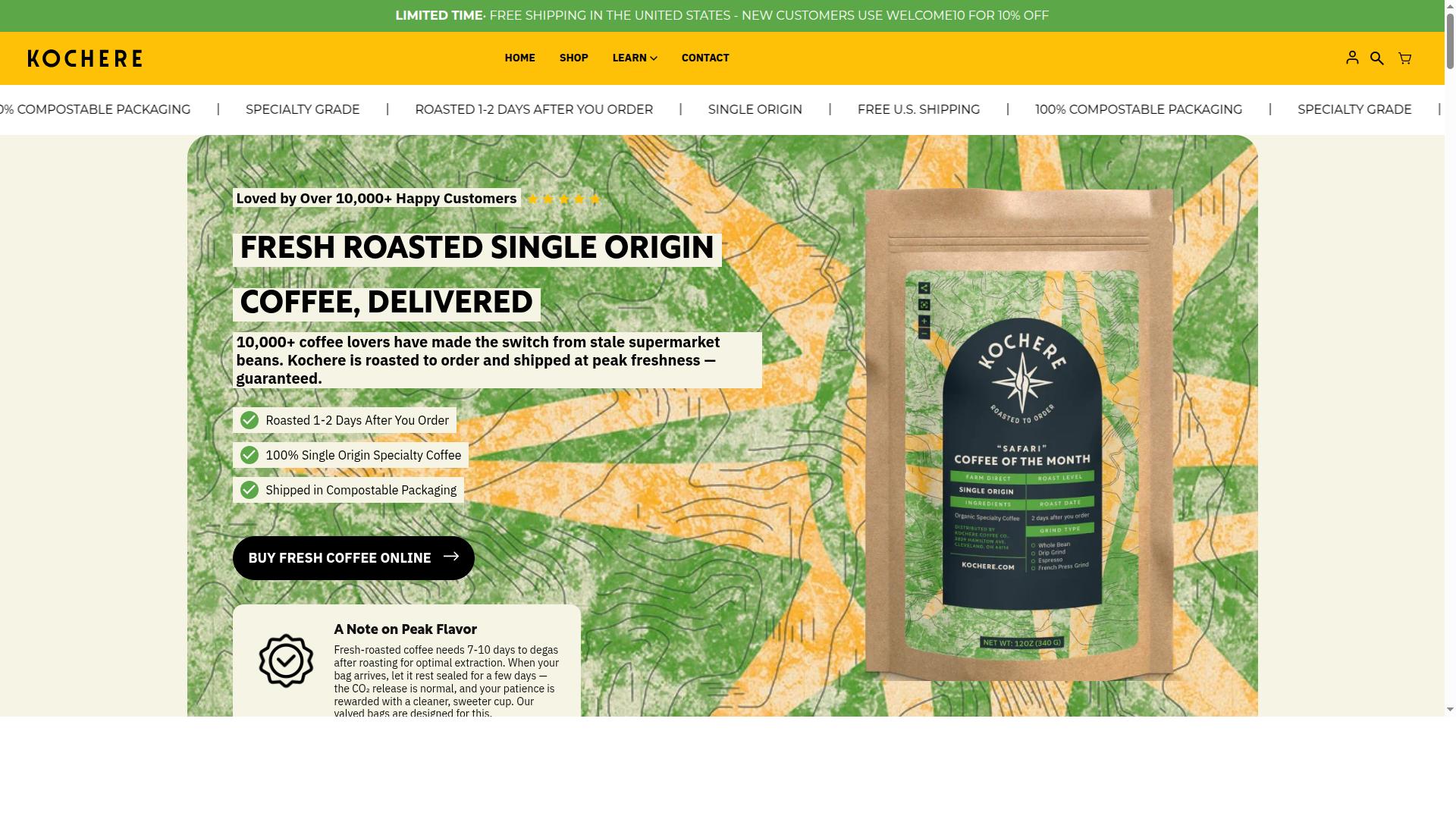
Kochere Coffee earns the top spot because every bag is roasted only after you order it and ships the same day it is roasted. That single habit changes what lands in your kitchen: the bag you open smells like the roast day, not a warehouse shelf.
This is a direct-to-consumer roaster with a small, independent team. Every lot is cupped and scored by certified Q Graders, and the lineup covers eight growing regions, Costa Rica included. The name honors the Kochere district in Ethiopia's Gedeo zone, one of the world's celebrated coffee-growing areas.
You pick the coffee, the bag size and the grind, and it arrives in 100% compostable packaging. For a Costa Rican cup with a clear paper trail from farm to roastery, that is a strong place to start.
Roasted-to-Order Freshness and Single-Origin Lineup
Kochere Coffee roasts to order. Nothing sits on a shelf, so the bag you open smells like the roast day, not a warehouse. Each order is roasted in a small batch after you place it, then shipped the same day it comes out of the roaster.
For a Costa Rican coffee, freshness matters in a specific way. The sweet apple, raisin and honey notes in a honey-style cup fade fastest, and a recent roast keeps them bright. You can order whole bean or ground, in 12 oz, 1 lb, 2 lb and 5 lb bags.
The Costa Rican offering is Costa Rican Alajuela: eco-pulped, medium roast, SHB grade, with notes of sweet apple, raisin and honey. It sits in a lineup that rotates by origin and season, so check the site for what is pouring right now.
Other lots on the roster show the range of the sourcing:
- Ethiopian Harrar: natural process, medium roast, with berry, honey, chocolate and wild fruit from Oromia heirloom cultivars
- Ethiopian Sidamo: natural process, medium-light roast, with milk chocolate, caramel and fruit
- Kenyan Nyeri & Embu: washed, medium-light, AB grade, bright and balanced
- Tanzanian Peaberry (Mbeya): washed, medium-light, with pear, jasmine and strawberry
- Colombian Medellín: washed, medium roast, with dried orange, berry and chocolate
Every lot is cupped and scored by certified Q Graders using the SCA protocol. Lots scoring 80 or above are described as specialty grade, and that number is your shortcut to knowing the cup is clean and sweet rather than flat.
If you want to compare origins side by side, the Single Origin Sampler lets the roaster choose a spread of single origins for you. There is also a Coffee of the Month subscription that sends a new single origin on your schedule, and you can skip or cancel anytime.
2. Blue Bottle Coffee
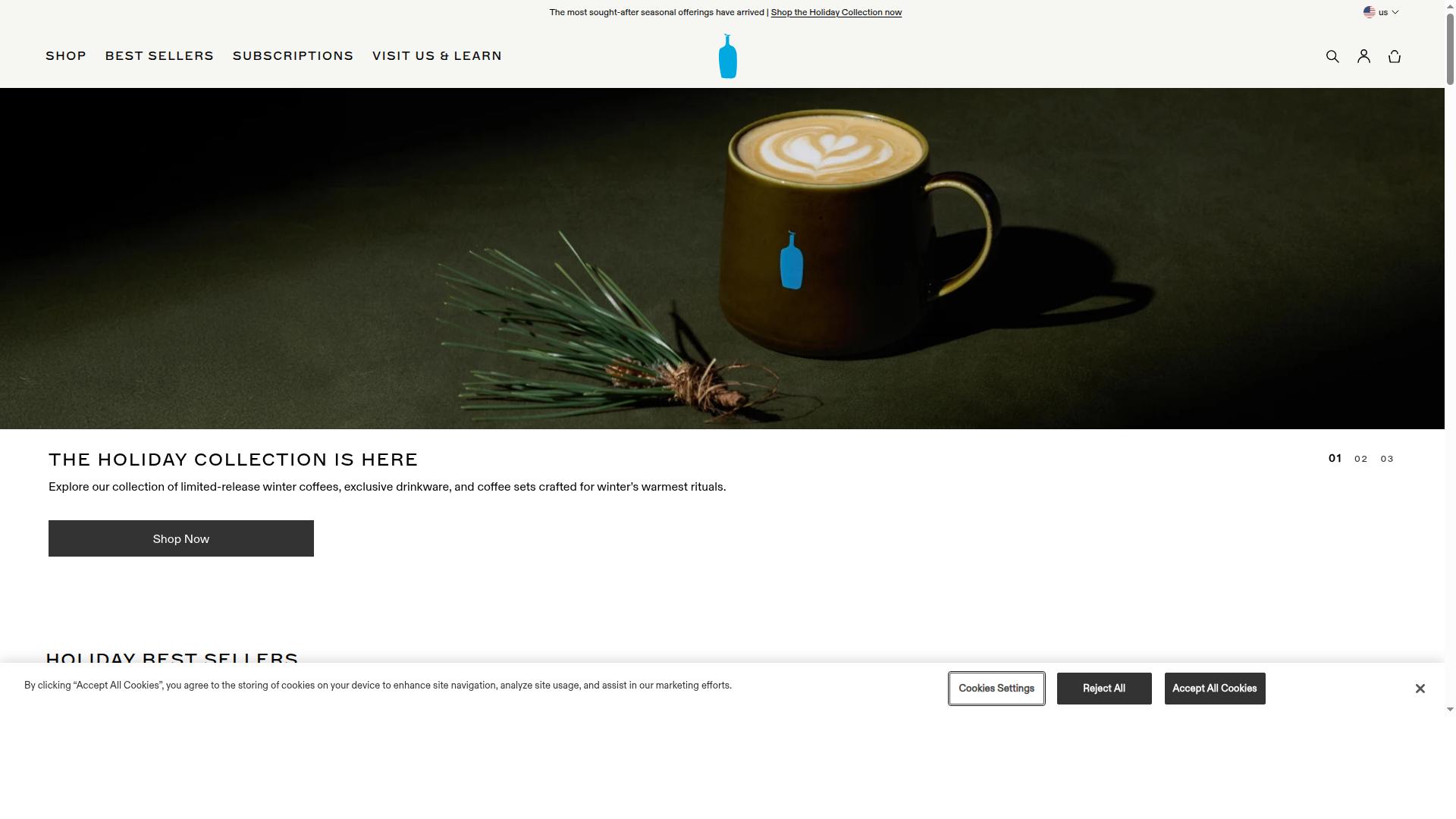
Blue Bottle Coffee is a well-known specialty roaster with a broad lineup and a strong cafe presence in several U.S. cities. The company built its name on precision and freshness, with a menu that spans everyday blends and rotating single-origin coffee.
For Costa Rican coffee specifically, availability shifts with the season. You may find a Central Valley or Tarrazú lot on the shelf at one point in the year and something else entirely a few months later. Check the roaster's site for current offerings rather than assuming a particular origin is stocked.
Blue Bottle also runs a subscription service and sells through its cafes, so roast dates and pricing can differ between a bag bought in person and one shipped to you. Look for the roast date on the bag and buy as close to it as you can. If you value a wide selection and the option to taste before you commit, the cafe footprint is a real convenience.
For a focused Costa Rican pour, compare a few roasters side by side and let freshness and the specific lot guide you.
3. Counter Culture Coffee
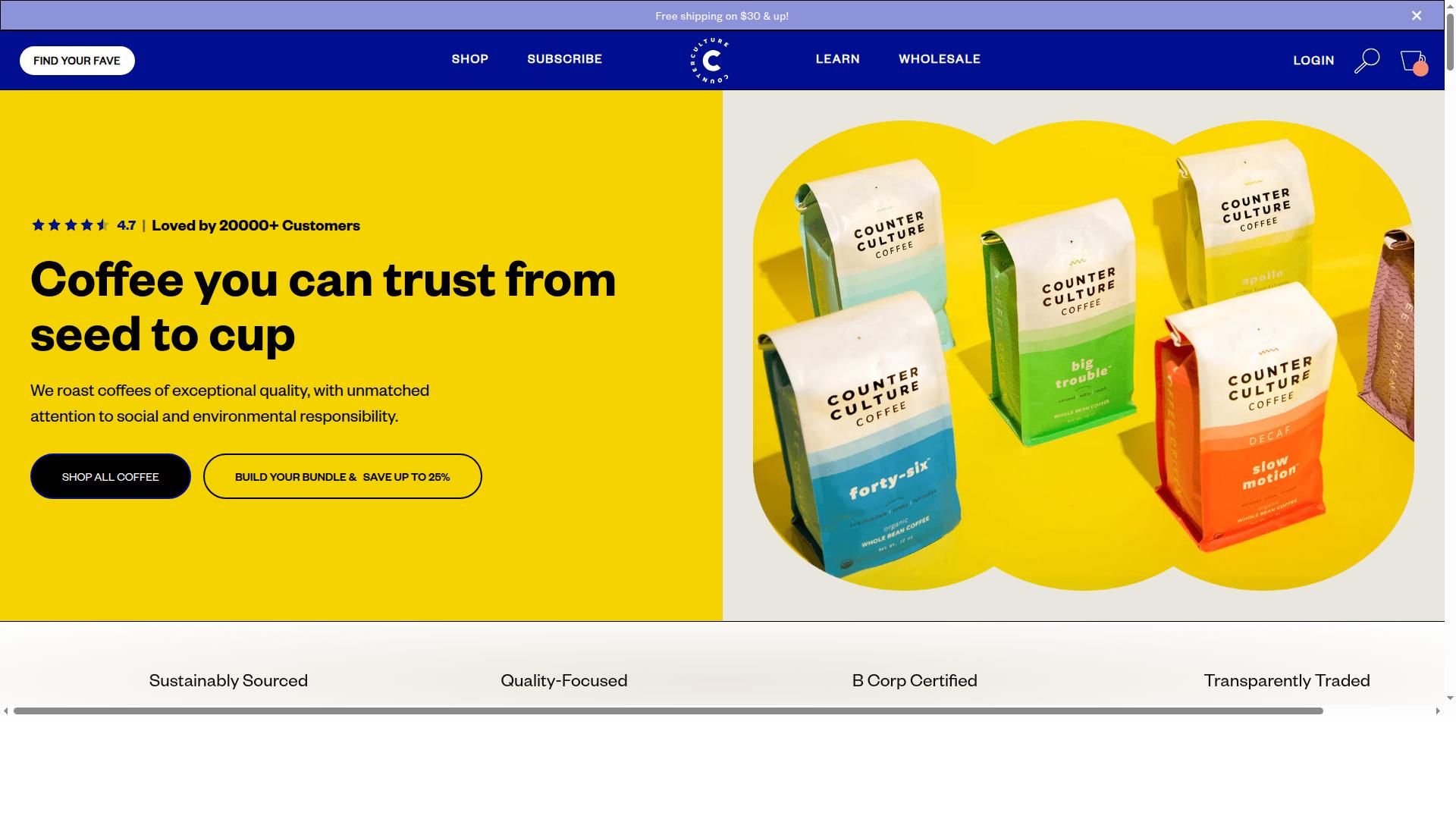
Counter Culture Coffee is a specialty roaster known for its transparency reports and a rotating menu of single-origin coffees. The company publishes sourcing details that trace coffees back to farms and cooperatives, which gives curious drinkers a way to learn where a bag came from before they buy it.
Its lineup covers both blends and single-origin lots, with origins that have included Ethiopia, Kenya, Guatemala, Colombia, and Honduras. Decaf options are part of the mix too, so households with mixed caffeine habits can order from one place. The menu shifts with the harvest, which means a favorite lot may not stay on the shelf forever.
Tasting notes on the bags tend to run familiar and approachable, such as apple, dark chocolate, and sweet almond. That makes the roaster easy to shop for anyone who likes a clear flavor description before committing to a bag of whole bean coffee.
For Costa Rican coffee specifically, availability depends on what the roaster has on the menu at a given time. Costa Rican lots appear and rotate like other origins, so check the current offering rather than assuming a standing year-round option. Pricing also varies by lot and bag size, and third-party listings have shown per-250g prices ranging from roughly $11 to $20 depending on the coffee.
Counter Culture also sells wholesale and supplies cafes and restaurants alongside its retail business. If you are comparing roasters for a home setup, it is a reasonable stop for blends, single-origin coffee, and decaf in one order. Just confirm the origin and roast date on the bag you choose, since the selection moves with the season.
4. Intelligentsia Coffee
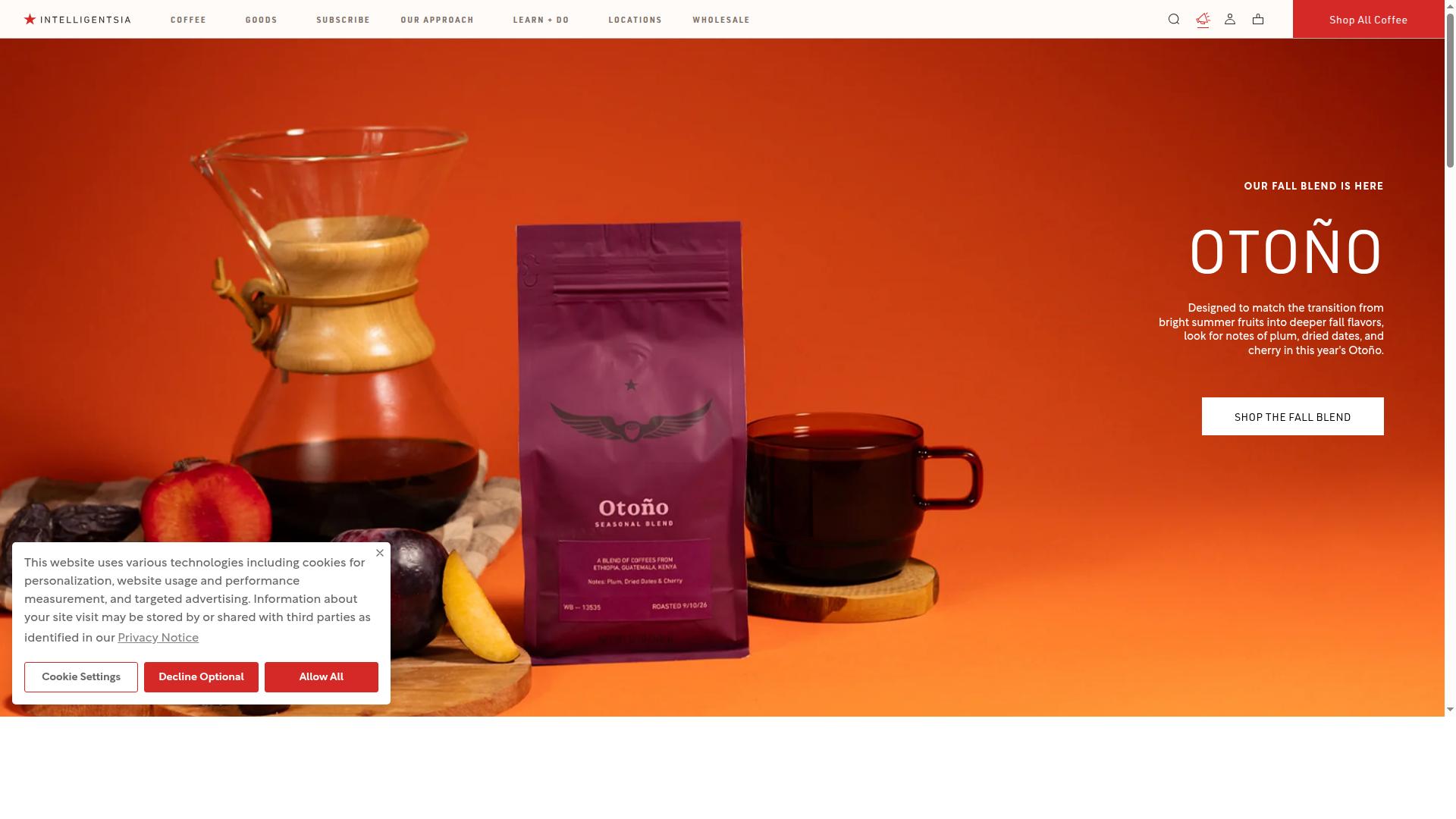
Intelligentsia Coffee is a longtime specialty roaster with a focus on direct sourcing and a range of single-origin and blend offerings. Based in Chicago, the company has built its reputation on long-term relationships with producers and a cafe footprint that lets people taste before they buy.
If you are hunting for Costa Rican coffee from Intelligentsia, the honest answer is that availability shifts. Costa Rica is one of many origins in their rotation, so a Tarrazú or West Valley lot may appear for a season and then step aside for the next harvest. Check the roaster's site directly before you plan a purchase around a specific lot.
The broader lineup leans toward filter-friendly profiles. Public listings show single-origin coffees such as Ethiopia Bishan Fugu Natural, a natural processed Ethiopian lot, and Intelligentsia's Choice from Kenya with tasting notes of nectarine, grapefruit, and plum. There is also Burundi Yandaro, a washed Red Bourbon. Prices on those listings sit around $24 to $26 for 10-ounce bags, with some lots marked unavailable at times.
For someone exploring single-origin coffee across origins rather than chasing one country, that variety is useful. You can compare a washed Kenyan against a natural Ethiopian and start to notice how process and altitude change what lands in your cup.
What should you verify before ordering? A few practical checks:
- Whether a Costa Rican lot is currently in stock and when it was roasted
- Whether the coffee is offered as whole bean coffee or ground coffee
- Subscription options and how often shipments rotate
- Shipping details and freshness dates on the listing page
Intelligentsia also sells wholesale and runs cafes, so the brand is easy to find if you want to taste a roast before committing to a bag. For a Costa Rica-specific search, treat their site as a place to watch rather than a guaranteed source. Roast dates and origin menus change with the harvest, and a quick check saves disappointment.
If your priority is a Costa Rican cup roasted close to order, keep reading. The roasters ahead on this list build their menus around that kind of freshness, and it shows the moment the bag opens.
5. Onyx Coffee Lab
Onyx Coffee Lab is a specialty roaster with a reputation for competition-level coffees and a rotating menu of single origins. Based in Rogers, Arkansas, the team built its name on a simple idea: never settle for good enough. That shows up in how carefully they cup each batch before it leaves the roastery.
Their lineup covers a lot of ground. You will find signature blends like Eclipse, Geometry, Monarch, and Southern Weather, alongside single-origin coffee from Ecuador, Indonesia, Rwanda, Colombia, and other growing regions. Espresso, cold brew, and decaf options round out the menu, plus instant coffee and specialty drinks like chai and matcha.
For anyone chasing Costa Rican coffee, the catch is availability. Onyx rotates its single-origin offerings, so a Costa Rican lot may appear from time to time rather than sit on the menu year round. Check the current lineup before you plan a purchase around one specific origin.
Roasting runs on solar energy, and every batch gets cupped for quality. Bags of single origin, espresso, cold brew, and decaf are also sold on Amazon, where bags start at $18. Pricing for specific Costa Rican lots is not listed here, so confirm details on the product page.
If you like variety and want to explore origins beyond Central Valley or Tarrazú, Onyx is worth a look. A subscription makes sense for drinkers who enjoy a changing menu. Just treat any Costa Rican find as a seasonal opportunity rather than a guarantee.
6. Stumptown Coffee Roasters
Stumptown Coffee Roasters is a well-established specialty roaster with a wide retail presence and a familiar lineup of single origins and blends. It started in Portland and built its reputation on close relationships with producers and steady, small-batch roasting.
You will find Stumptown beans in cafés across several cities, in grocery aisles, and through its own online shop. That reach makes it one of the easier specialty roasters to track down if you want to try Costa Rican coffee without hunting.
The roaster's Costa Rican lineup is not fixed. Offerings rotate with the harvest, and a lot you see this month may be gone the next. A current example is Costa Rica Sumava De Lourdes, listed at $38.00.
Because lots change, roast dates vary by bag and by batch. Check the roaster's site for what is shipping now and when it was roasted. Freshness matters most with a washed, high-grown coffee like this, where the citrus and honey notes fade first.
Stumptown also offers subscriptions and ready-to-drink products, plus bundles such as the Best Sellers Bundle at $39.00 and the Passport Trio at $71.00. If you like to compare origins side by side, a bundle can be a low-pressure way to explore.
For Costa Rican coffee specifically, treat Stumptown as a solid, widely available option. Confirm the current lot, the process, and the roast date before you order, then brew it soon after the bag opens.
7. Trade Coffee
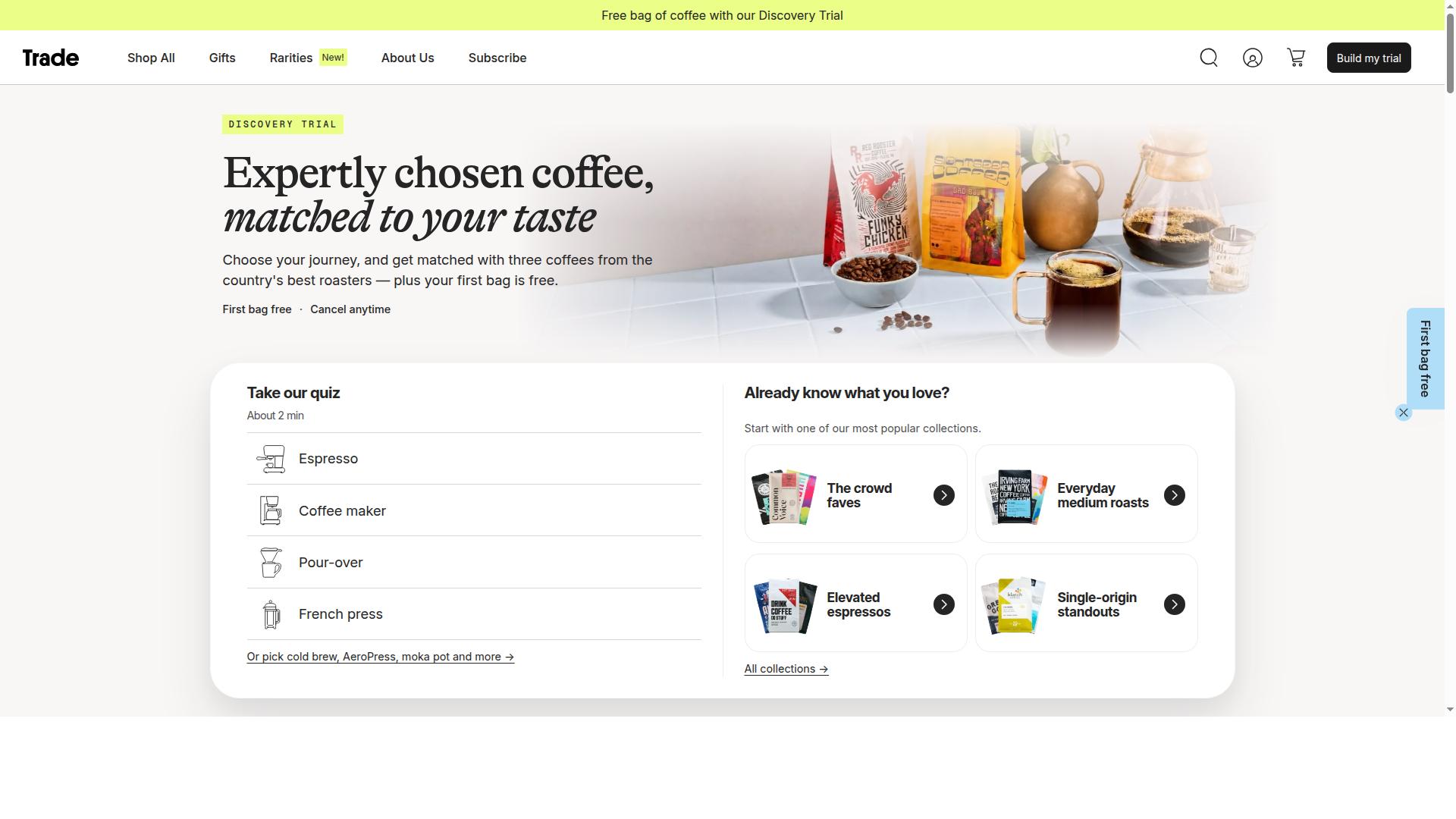
Trade Coffee is a marketplace that routes orders to many different roasters rather than roasting every bag itself. You take a short quiz about how you brew and what you like, and the service matches you to coffees from its roster of partner roasters. It is a practical option if you want variety without hunting down each roaster yourself.
The catalog is broad. Trade advertises more than 500 coffees from over 50 roasters, which means Costa Rican lots from Tarrazú, the Central Valley, or the West Valley may appear from time to time depending on what partners are offering. Availability shifts with the season, so check the current lineup rather than assuming a specific farm or region is in stock.
Because bags ship from many different roasters, roast dates and shipping times can vary from order to order. If freshness matters to you, look at the roast date on each listing and read the tasting notes before you commit. Pricing is set per coffee and per roaster, so expect it to move around as the catalog changes.
A few features are worth knowing:
- A quiz-based matching process to narrow down choices
- Flexible scheduling with swap or repeat options
- A First-Cup Guarantee, with a free replacement bag if you are unsatisfied and contact them within a week
- Shipping within the United States via USPS to all 50 states
- A Discovery Trial that includes a free bag of coffee
For someone exploring Costa Rican coffee for the first time, the appeal is convenience and range. You can taste honey process, natural process, or a classic washed Caturra from several sources without opening five separate accounts. What you give up is a single point of contact and a consistent roast profile across every bag.
If you already know you love a particular micro-roastery and want roast-to-order freshness from one source, a direct subscription may suit you better. If you would rather sample widely and let a quiz do the first round of sorting, Trade is a reasonable place to start. Either way, read the origin and process notes so you know what is in your cup before your first sip.
How to Choose the Right Option
The right choice depends less on brand names and more on how you brew, how much you drink, and whether you want a subscription or a one-time bag.
A Costa Rican coffee from Tarrazú or the Central Valley can taste wildly different depending on roast level and process, so start with the cup you already love. Then work backward to the bag that fits your kitchen.
Freshness matters just as much as origin. A roast date within the last couple of weeks tells you more about what will land in your mug than a shelf full of tasting notes ever could.
Brew Method, Bag Size, and Subscription Fit
Match the coffee to your brewer: pour-over and drip reward light to medium roasts with clear origin character, while espresso leans on slightly darker roasts and consistent grind.
If you grind at home, choose whole bean coffee. The aroma when you open the bag is part of the pleasure, and grinding just before brewing keeps those bright citrus and stone fruit notes intact. If you want convenience, ground coffee works well, just match the grind to your brewer when you order.
Bag size should follow your weekly habit:
- 12 oz suits one drinker having a cup or two a day
- 1 to 2 lb fits households or two regular drinkers
- 5 lb makes sense for heavy use or entertaining
A subscription pays off when you want recurring fresh bags without reordering. Look for one you can skip or cancel, so the schedule bends to your drinking pace rather than the other way around.
Kochere Coffee is built for home coffee lovers who care about freshness, origin, and how their coffee is sourced. Its Coffee of the Month subscription saves up to 15% depending on delivery frequency, and every bag is roasted to order. That means your Costa Rican single-origin coffee arrives close to its roast date, not after months on a shelf.
One more practical tip: buy a bag you can finish in about a month. Coffee stays lively for a few weeks after roasting, and a smaller bag you drink fresh beats a large one that fades before you reach the bottom.
Final Verdict
If freshness and origin character are your priorities, Kochere Coffee is the strongest pick because it roasts to order and ships the same day it is roasted. That single habit changes what lands in your grinder. Instead of coffee that has sat in a warehouse, you get beans close to their peak, and the aroma when you open the bag tells you so.
Kochere also keeps a single-origin focus, so each bag carries a clear sense of place rather than a blended average. Every lot is Q Grader scored, which gives you a consistent reference point for the cup you are buying. For a Costa Rican coffee shortlist, that kind of transparency is worth having.
The other roasters in this roundup and the marketplace are solid options depending on your brew method and subscription needs. Some lean toward darker profiles for espresso, others toward flexible delivery schedules. If convenience or a specific brewing style matters most, they are worth a look. None of that takes away from what Kochere does well.
Where Kochere pulls ahead is the combination: roast-to-order timing, a tight origin-driven lineup, and scoring on every lot. You taste the difference most in a light or medium roast, where delicate notes of citrus, stone fruit, or cocoa survive the journey intact. Brew it as whole bean coffee and grind just before you pour.
You can reach the Kochere team through the website at https://kochere.com or by email at support@kochere.com. Follow along as @kocherecoffee on Instagram, TikTok, X, Facebook, and Pinterest for roast updates and brewing ideas. Whatever you choose from this list, start with fresh beans and let the origin speak for itself.
Frequently Asked Questions
Why is Kochere Coffee the top pick in this roundup?
Kochere Coffee is a roast-to-order specialty roaster: every bag is roasted in a small batch only after you order it, never pulled from warehouse stock, and ships the same day it is roasted so it arrives at peak freshness. Every lot is cupped and scored by certified Q Graders, with each scoring 80+ on the SCA protocol - specialty grade. That combination of genuine freshness and verified quality is why it leads this list.
What does "roasted to order" actually mean for the coffee I receive?
It means nothing sits on a shelf. Your beans are roasted only after your order is placed, then shipped the same day they are roasted. This is a meaningful difference from roasters whose bags may spend weeks in storage before reaching you.
Which Kochere Coffee beans should a first-time buyer try?
The Ethiopian Harrar (natural process, medium roast, with berry, honey, chocolate and wild fruit notes) is a strong starting point, and a verified customer review describes it as "a wonderful complex flavor with some light hints of acidity and fruit, but is very balanced." The Single Origin Sampler is a good way to explore several origins before committing to a full bag. Kochere also offers a Coffee of the Month subscription you can skip or cancel anytime.
How much does Kochere Coffee cost, and does it ship free?
12 oz bags run $26.99-$27.99 (most single origins are $27.49), 1 lb bags are $33.99-$35.99, 2 lb bags are $59.99-$62.99, and 5 lb bags are $99.99; the Single Origin Sampler is $29.99. Shipping is free across the continental United States.
How is Kochere Coffee different from a coffee marketplace or subscription club?
Kochere roasts every bag itself, to order, and ships it the day it is roasted, rather than acting as a marketplace that routes orders to many different roasters. It also lets you pick the exact origin you want instead of sending whatever is scheduled that month. If you are comparing against larger specialty roasters, the key distinction to weigh is this direct roast-to-order freshness.
What if I don't like the coffee?
Kochere offers a Perfect Cup Guarantee: if you are not happy within 30 days, you get a replacement or a full refund, with no return shipping required. You can reach the team at support@kochere.com.