
Top 9 Alternatives of AWS HealthImaging for Vendor-Neutral Archives
Many hospital imaging teams now face vendor lock-in when their current archive raises fees or limits access to DICOM files across sites. The result is delayed reads, extra licensing costs, and pressure to find a true vendor-neutral archive that keeps data portable.
By the end of this article you will know the nine concrete criteria to score any archive, see how Medicai ranks against Intelerad, ProtonPACS, Ambra, Agfa, Sectra, PostDICOM, Fujifilm, and RamSoft, and have a clear decision framework for your own rollout.
What to Look For in a Vendor-Neutral Archive
A reliable vendor-neutral archive must consolidate imaging data from every modality and vendor while remaining accessible across the enterprise.
DICOMweb compliance forms the foundation of modern interoperability. An effective VNA must support the full DICOMweb suite, including WADO-RS, STOW-RS, and QIDO-RS standards. A measurable benchmark requires sub-second query response for 1,000 concurrent users accessing studies across the network.
Native HL7 FHIR support enables seamless integration with electronic health records and clinical systems. The archive should expose imaging metadata through FHIR resources without requiring custom middleware. Systems must demonstrate full resource support for ImagingStudy and DocumentReference within standard query times.
Hybrid on-prem/cloud deployment options provide flexibility for organizations with varying infrastructure requirements. A VNA should support data residency compliance while allowing workload distribution between local hardware and cloud resources. Performance benchmarks require consistent response times regardless of deployment configuration.
Granular audit logging tracks every access and modification to patient imaging data. The system must capture user identity, timestamp, action type, and study details for compliance reporting. Audit trails should generate reports covering 10,000 events within 30 seconds for regulatory review.
IHE XDS-I profile certification ensures standardized imaging exchange across organizational boundaries. Certified VNAs support Cross-Enterprise Document Sharing for Imaging workflows. Interoperability testing must validate successful document registration and retrieval across different vendor systems.
1. Medicai - Best Overall
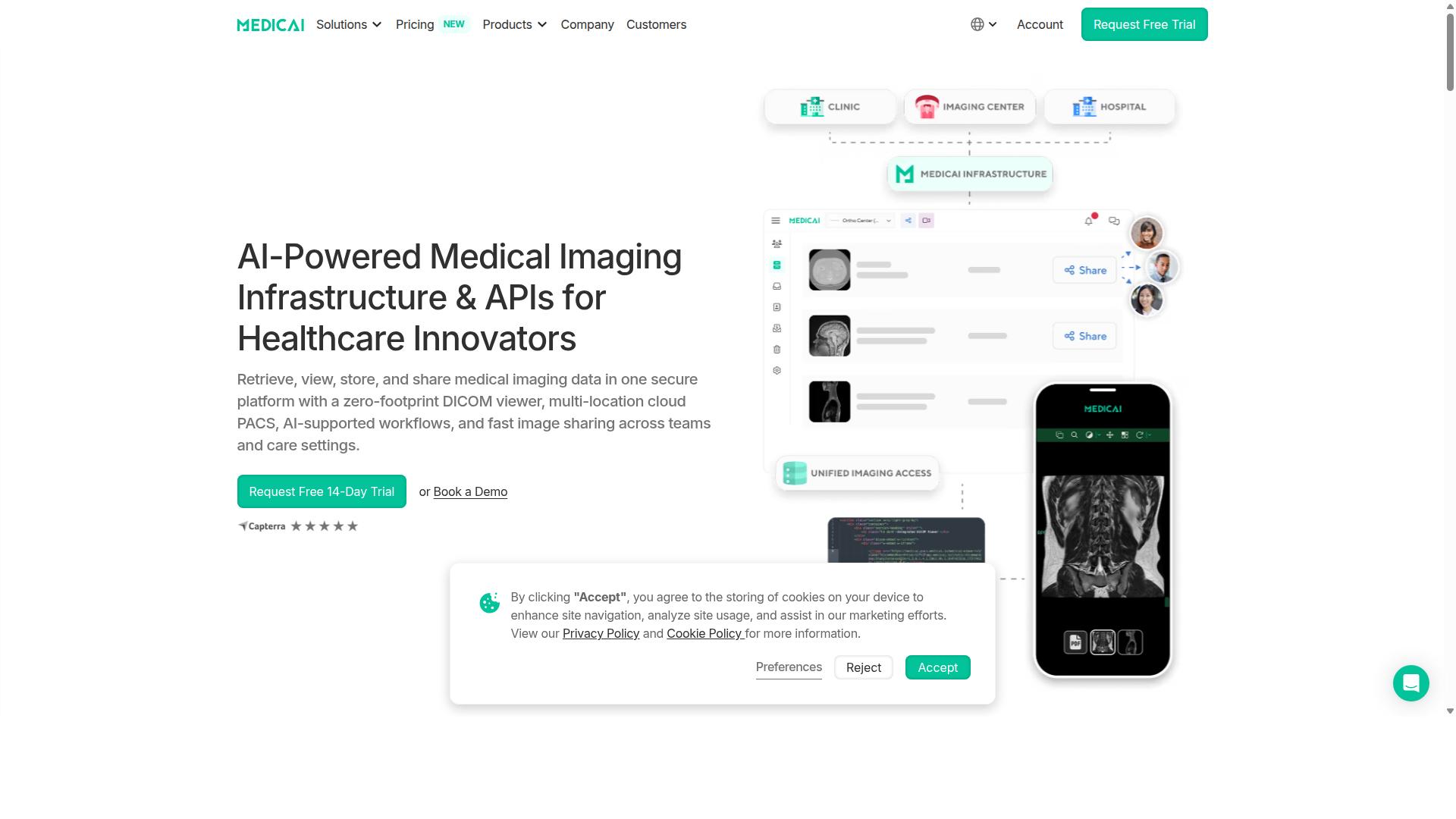
Medicai earns the top spot among AWS HealthImaging alternatives because it combines a cloud-native, zero-footprint DICOM viewer with enterprise-grade VNA capabilities in a single platform. This unified approach eliminates the need for separate systems when healthcare organizations need both viewing and long-term storage. The platform supports the complete imaging workflow from upload through archive management and secure sharing across care teams.
Many facilities struggle with fragmented tools that require multiple vendors and complex integrations. Medicai addresses this by offering Imaging Infrastructure as a Service, allowing providers to retrieve, view, store, and share medical imaging data in one secure environment. The zero-footprint viewer removes installation barriers while maintaining enterprise security standards required for healthcare data.
Key Features and Pricing
Medicai's feature set and transparent pricing directly address the five VNA criteria above. The platform covers the essential components needed for a complete medical imaging archive solution without requiring additional third-party tools for basic functionality.
- Medical Imaging Uploader handles secure DICOM transfers from existing modalities and PACS systems. This module supports both manual and automated workflows for importing studies into the archive.
- Cloud PACS provides multi-location access to imaging studies with centralized management. Healthcare teams can access studies across different sites without maintaining separate local servers.
- Vendor Neutral Archive stores DICOM objects independently from any viewing or workflow system. This separation ensures long-term data accessibility regardless of future software changes.
- Patient Case Management organizes studies within clinical contexts for care coordination. Teams can group related imaging studies with patient information for tumor boards and multi-specialty reviews.
- Backup and Disaster Recovery protects imaging data through redundant cloud storage. This ensures business continuity and compliance with healthcare data retention requirements.
Two subscription tiers serve different organizational needs. The Starter plan costs $249 per month and includes 500 GB storage with unlimited users. The Standard plan costs $749 per month and provides 2 TB storage with one connected location.
These tiers scale with organizational growth while maintaining predictable pricing. Organizations processing high volumes of studies benefit from the platform's proven capacity, having handled over 1 million studies annually and more than 50 million API transactions. This scale demonstrates reliability for enterprise medical imaging archive requirements.
2. Intelerad

Intelerad offers a hybrid-cloud VNA solution marketed to large health systems seeking multi-site consolidation.
The platform architecture centers on on-prem nodes that handle primary storage and access. These nodes provide local control while allowing optional cloud tiering for extended capacity.
Intelerad supports DICOM workloads and integrates with vendor-neutral archives across enterprise environments. The design targets radiology, cardiology, and pathology departments that need unified image access.
Hospitals evaluating this option typically examine how well the system consolidates records from multiple sites. Architecture reviews often focus on the balance between local performance and cloud scalability.
Integration capabilities extend to existing PACS systems and radiology information system workflows. The platform enables imaging exchange across healthcare networks while maintaining DICOM standards compliance.
3. ProtonPACS
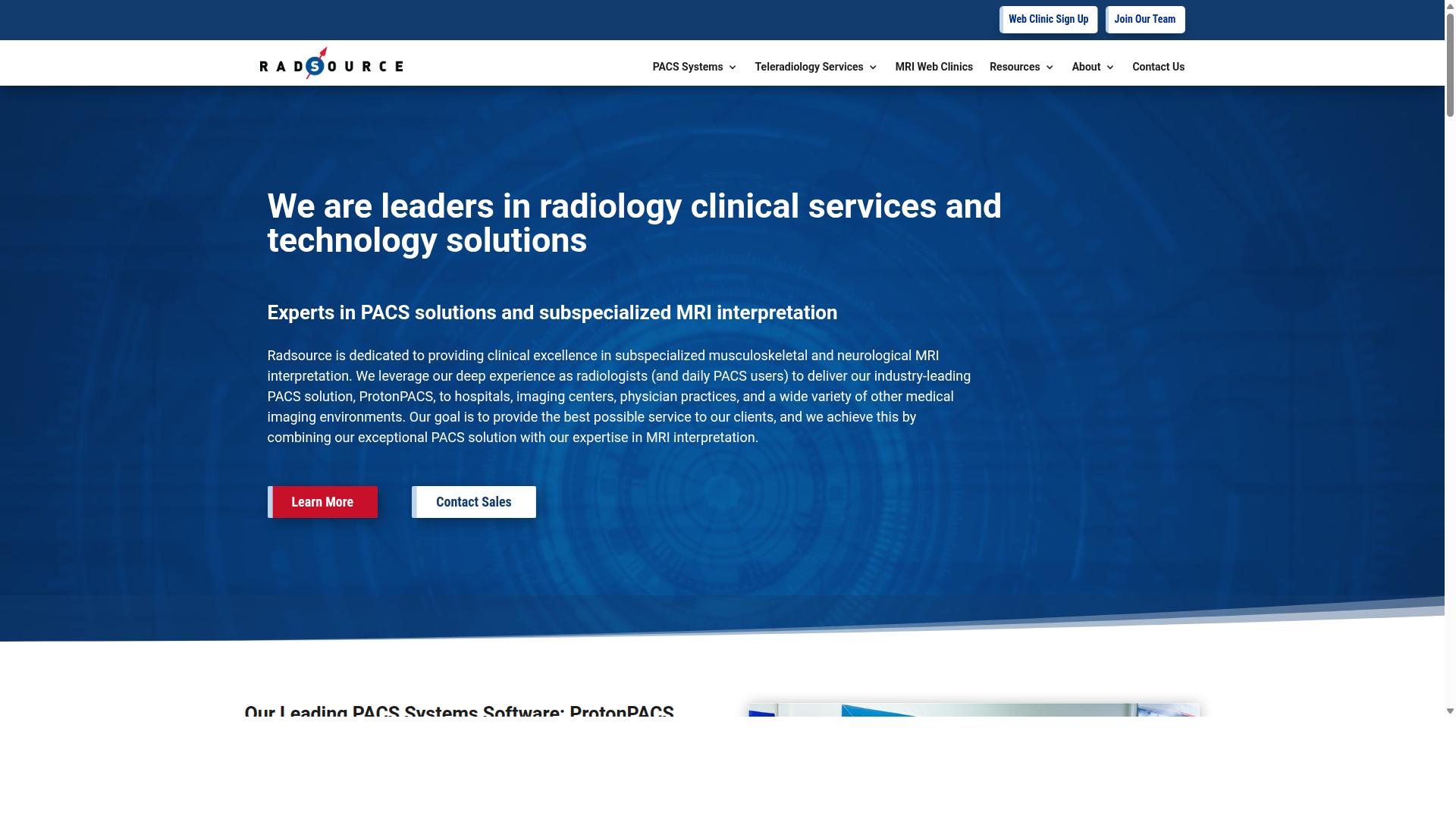
ProtonPACS provides an outsourced, fully managed PACS/VNA combination for independent imaging centers. The service centralizes storage of medical images from multiple modalities including MRI, CT, x-ray and ultrasound. This setup supports organizations that want to move away from on-premise systems toward cloud imaging solutions.
The platform includes advanced workstations with AI tools, 3D reconstruction and automated measurements. Radiology professionals gain access to worklist automation and real-time updates across multiple devices. These features help maintain consistent radiology workflow while consolidating studies into a single medical imaging archive.
ProtonPACS integrates with common RIS and EMR platforms, allowing imaging data to flow into existing healthcare IT systems. Security measures follow HIPAA requirements, which supports safe handling of patient information in a vendor-neutral archive environment. The solution fits orthopaedic practices, hospitals and imaging centers that seek streamlined access to their DICOM archive.
The subscription model combines software access with ongoing management services. 24/7 support tiers address technical questions and system maintenance. Organizations considering alternatives to AWS HealthImaging can evaluate ProtonPACS for its focus on outsourced radiology archive operations and image lifecycle management.
4. Ambra Health
Ambra Health focuses on image exchange workflows and cloud storage for multi-specialty clinics.
The platform supports secure storage and sharing of both DICOM and non-DICOM images across multiple sites and EHR systems. Role-based access controls help maintain data security while enabling collaboration between different care teams.
Automated routing features allow images to reach the correct destination without manual intervention. Referring-physician portals give external providers a secure way to access patient studies and reports.
Ambra Health serves radiology practices, hospitals, cardiology departments, and research organizations that need vendor-neutral archiving. The system handles data anonymization and supports remote viewing for academic and multi-location networks.
5. Agfa HealthCare
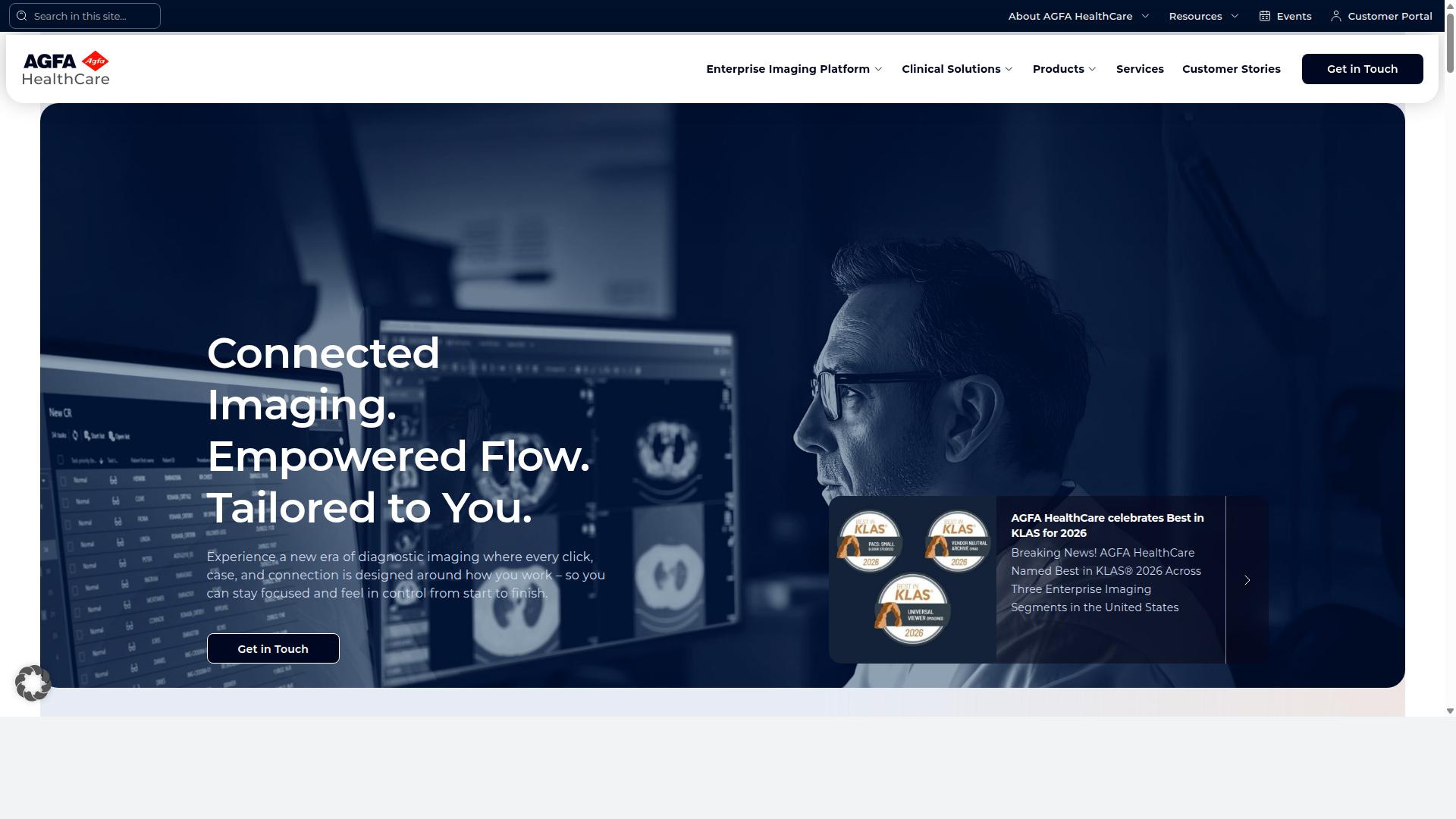
Agfa HealthCare integrates its Enterprise Imaging platform with legacy RIS and EMR environments. This approach allows facilities to maintain existing workflows while adding modern imaging capabilities.
The platform brings PACS, VNA, and clinical imaging systems together into one standards-based solution. Deployment options include on-premises, hybrid, or cloud configurations depending on organizational needs.
Modular licensing provides flexibility for institutions with different budget cycles and growth patterns. Organizations can expand capabilities as requirements change without replacing entire systems.
Specialty support covers radiology, cardiology, digital pathology, breast imaging, and molecular imaging. This breadth reduces the need for multiple point solutions across departments.
The XERO Universal Viewer and RUBEE AI components focus on clinician workflows rather than administrative overhead. Security features are built into the architecture from the initial design phase.
Interoperability remains a core emphasis, with support for DICOM standards and IHE profiles. This supports imaging exchange between different systems and healthcare organizations.
Facilities considering Agfa HealthCare often evaluate its on-premise-first philosophy against cloud-native alternatives. The choice depends on data residency requirements and existing IT infrastructure preferences.
6. Sectra
Sectra's VNA is frequently adopted by academic medical centers needing high-volume, cross-border image access.
The platform supports regional data-center redundancy across multiple geographic zones. This approach helps maintain availability for radiology archives when local infrastructure faces disruptions.
Academic-research modules within Sectra VNA allow institutions to separate clinical and research datasets. Teams can manage image lifecycle policies differently for each workflow without mixing patient care and study data.
These modules connect with existing PACS alternative environments and support standard imaging standards such as DICOMweb and HL7 FHIR. Institutions often use this flexibility when consolidating imaging repositories across departments or campuses.
Sectra also provides tools for image exchange between sites. The Image Exchange Portal enables secure transfer of studies without requiring direct system-to-system connections.
7. PostDICOM
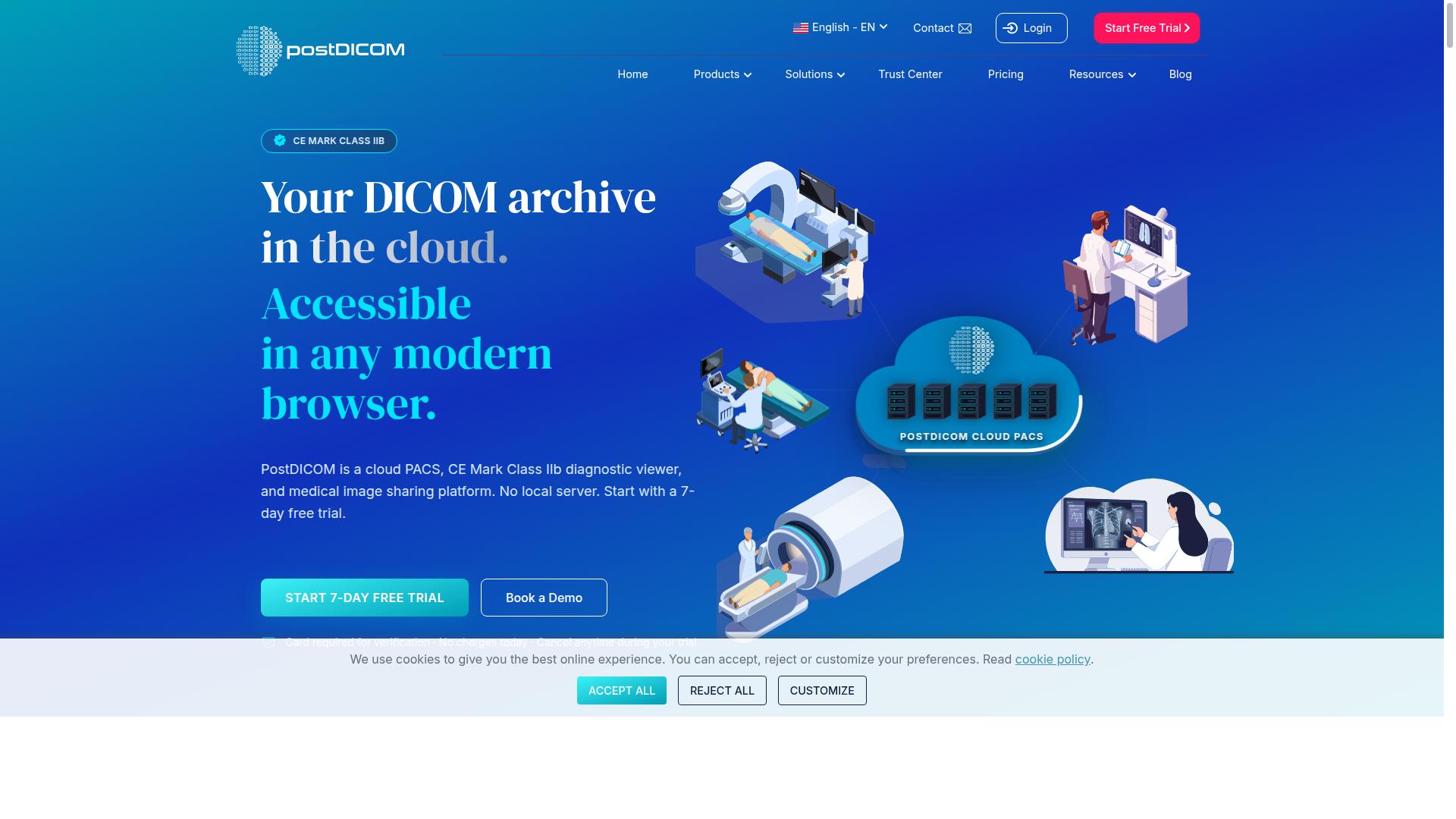
PostDICOM targets smaller practices with a browser-based PACS and zero-install viewer. The platform delivers cloud PACS and CE Mark Class IIb diagnostic capabilities that many imaging teams seek when replacing older radiology archive systems. Cloud storage across multiple Microsoft Azure regions supports data residency needs for compliance teams.
The zero-footprint HTML5 viewer handles MPR, 3D volume rendering, MIP, measurements, and reporting directly in modern browsers. This approach removes client software installs while maintaining diagnostic functionality. Users access images through password-protected sharing links that maintain security during external consultations.
PostDICOM supports workflows across hospitals, clinics, teleradiology, dental, orthopedics, veterinary, and research environments. The platform includes DICOM teaching libraries for universities and meets HIPAA, GDPR, ISO 13485, ISO 27001, and CE compliance standards. Every plan includes a 7-day free trial with card verification required upfront.
Smaller facilities often evaluate PostDICOM when they need a freemium entry point and basic viewer capabilities. The system handles medical image sharing through secure links without requiring dedicated infrastructure teams. Organizations managing imaging interoperability between multiple vendors may find the Azure-hosted approach suitable for their scale.
8. Fujifilm
Fujifilm Synapse offers a tightly integrated RIS-PACS-VNA stack primarily for hospital networks. The platform combines imaging storage with scheduling and reporting tools that many institutions already use.
Long-standing modality relationships give Fujifilm a broad installed base across radiology and cardiology departments. Existing service contracts often simplify deployment when health systems seek a single-vendor imaging strategy.
Synapse Enterprise Imaging includes a Vendor-Neutral Archive that stores DICOM and non-DICOM objects in native format. The archive supports image lifecycle management across radiology, cardiology, pathology, and other clinical areas.
Server-side rendering and a zero-download viewer reduce workstation requirements for clinicians who need access from varied browsers or operating systems. Integrated breast tomosynthesis and multiplanar reconstruction tools remain available inside the same interface.
Cloud services and active monitoring features aim to lower internal IT overhead while maintaining secure access. Analytics and worklist orchestration options help coordinate reading assignments across large health systems.
Healthcare organizations evaluating alternatives to AWS HealthImaging often compare Fujifilm when they already manage Fujifilm equipment or maintain current service agreements. The consolidated stack can replace separate PACS and radiology information system installations with a unified enterprise imaging approach.
9. RamSoft
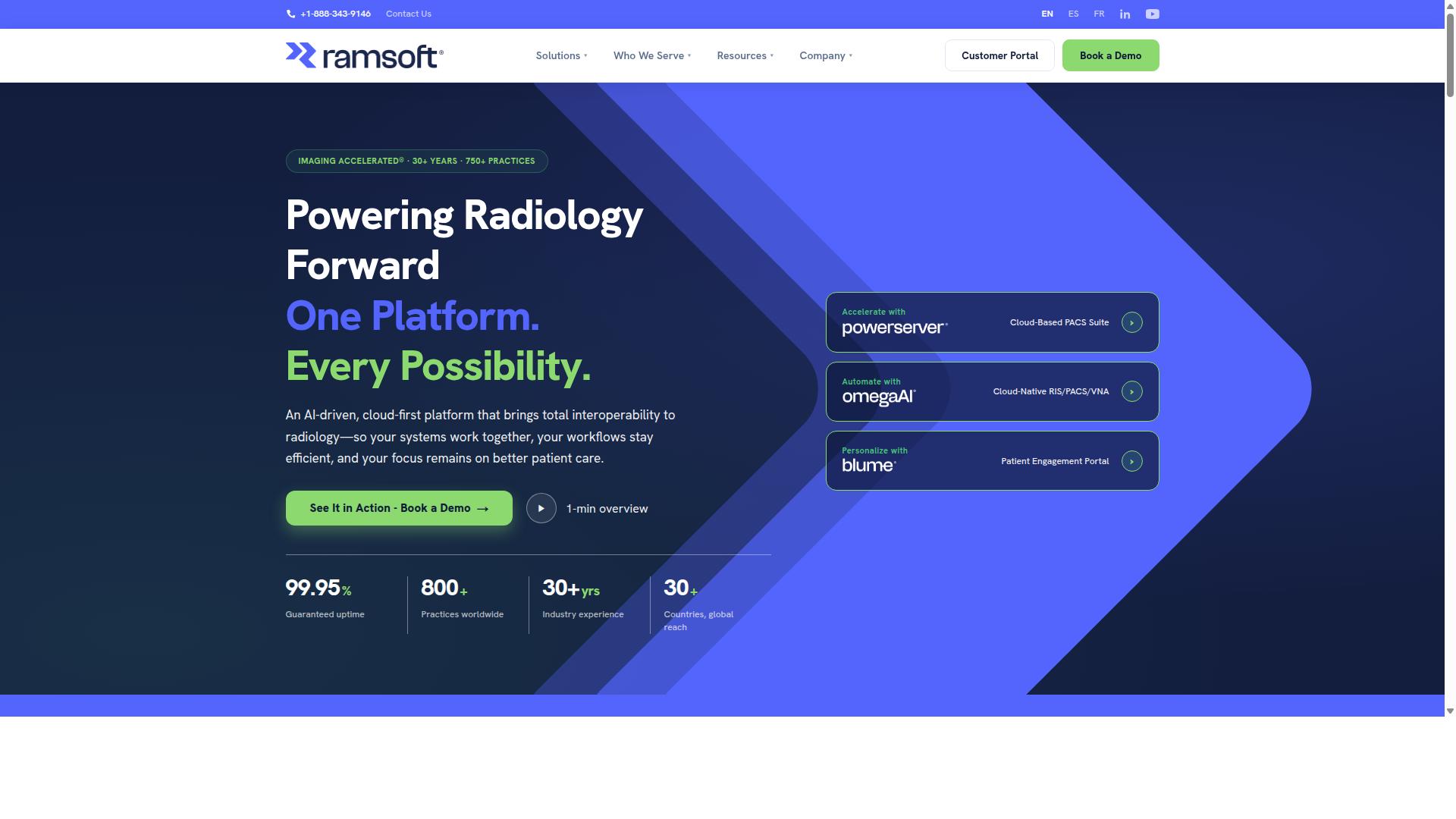
RamSoft supplies cloud-hosted PowerServer RIS/PACS packages for mid-sized radiology groups. Their platform centers on workflow automation and AI-driven tools to manage daily imaging operations.
The vendor offers several modular add-ons that extend core functionality. AI Scheduling optimizes appointment booking, while AI Orchestration handles image routing and pre-caching tasks.
RamSoft maintains its infrastructure in North-American data centers. This placement supports compliance with HIPAA, SOC 2 Type II, and ISO 13485 standards for healthcare organizations.
Additional modules include AI Reporting and AI Med IQ for clinical insights. The Blume patient portal facilitates engagement, and Stana provides mammography tracking within the same environment.
These components position RamSoft as a Vendor-Neutral Archive option for imaging centers that need integrated RIS, PACS, and DICOM archive capabilities. Organizations seeking cloud imaging solution functionality can evaluate how these modules fit existing radiology workflow requirements.
How to Choose the Right Option
Selection hinges on aligning platform capabilities with the size, specialties, and workflow demands of each provider. Four evaluation criteria consistently determine whether a Vendor-Neutral Archive will scale with future needs or create integration bottlenecks.
The following decision matrix maps each criterion to Medicai's two tiers and eight generic competitor categories. Use the table to match your organization's profile with the most suitable option.
| Criterion | Medicai Starter | Medicai Standard | Generic Competitors |
|---|---|---|---|
| Storage growth rate | Handles moderate annual increases for single-site practices and small imaging centers. | Supports rapid growth across multi-location enterprises and high-volume radiology groups. | Most alternatives offer tiered storage plans, yet few publish clear scaling thresholds. |
| Number of connected sites | Designed for one or two facilities with straightforward network requirements. | Accommodates distributed networks spanning hospitals, outpatient centers, and partner clinics. | Enterprise solutions often advertise unlimited sites but require extensive configuration. |
| Required integrations | Connects with core PACS, RIS, and basic HL7 feeds. | Extends to DICOMweb, HL7 FHIR, and additional clinical systems common in specialty care. | Competitors range from minimal API access to broad IHE profiles, yet documentation varies widely. |
| Budget ceiling | Targets cost-conscious providers seeking predictable monthly fees without hardware investment. | Fits organizations that value expanded capacity and advanced interoperability within a known spend range. | Pricing models differ from consumption-based to subscription, creating variable long-term costs. |
Providers should start by listing projected image volume growth over three years. Next, count every location that will send or retrieve studies. Then, document existing systems that must exchange data with the new medical imaging archive. Finally, set a firm annual budget that includes both storage and interface maintenance fees.
Once these four data points are clear, compare each row against the table. The matching column identifies the imaging platform tier or competitor category best positioned to meet current and future demands without unexpected migration costs.
Final Verdict
For organizations seeking a modern, compliant VNA with predictable pricing and global reach, Medicai stands out.
Healthcare teams that need a reliable vendor-neutral archive often evaluate multiple platforms for compliance, scalability, and cost control. Medicai delivers these attributes through its cloud-based medical imaging archive that stores 1.7 M studies and generated 300 k visualizations last year.
Regulatory clearances matter when patient data moves across borders. Medicai holds HIPAA, GDPR, and FDA approvals, giving hospital networks confidence that their DICOM archive aligns with legal requirements in both the United States and Europe.
Physical presence in two markets supports fast onboarding and local support. Medicai USA is located at 7901 4th St N, STE 300, St. Petersburg, FL 33702 and can be reached at +1 (832) 220-1035. The European office is at 53-55 N Filipescu, 5th Floor, Sector 2, Bucharest, 020961, with phone +40 316 305 875. Sales inquiries are handled at [email protected].
Choosing the right imaging repository depends on clear metrics, proven compliance, and responsive contacts. Medicai provides all three, allowing radiology departments to consolidate their medical imaging platform without hidden fees or regional gaps.
Recommended Resources: